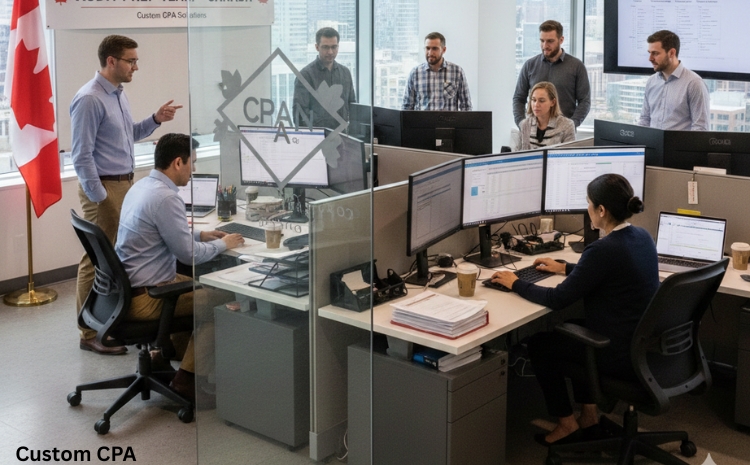
Complete Guide to T2 Corporate Tax Return
Preparation 2026
1. Who Must File a T2 Corporate Tax Return?
In Canada, every corporation that is resident in Canada must file a T2 Corporate Income Tax Return for each taxation year, regardless of whether it earned any income or owes any tax. This is not optional — even dormant corporations, holding companies, and non-profit entities (that are not tax-exempt charities) are legally required to file. The obligation arises the moment a corporation is incorporated under federal or provincial law.
Non-resident corporations must also file a T2 if they carried on business in Canada, disposed of taxable Canadian property, or if the CRA has sent them a demand to file. The T2 is the primary mechanism through which the CRA assesses a corporation's income tax liability, validates eligible deductions, and determines refundable tax credits such as the Small Business Deduction (SBD) and the Scientific Research and Experimental Development (SR&ED) credit.
Understanding your corporation's residency status, fiscal year-end, and applicable provincial filing obligations is the essential first step before any T2 preparation begins. This guide is especially relevant for Canadian Controlled Private Corporations (CCPCs) — the most common corporate structure in Canada. For a full overview of CCPC structures and their tax implications, read our resource on Canadian Controlled Private Corporations.
🇨🇦 Need Expert T2 Filing Support for Your Corporation?
CustomCPA's CPA-led team prepares accurate, optimized T2 returns for Canadian corporations of all sizes — on time, every time.
2. T2 Filing Deadlines for 2026
Missing T2 deadlines is one of the most costly and avoidable mistakes a Canadian corporation can make. The CRA imposes automatic late-filing penalties and daily compound interest on outstanding balances. The rules differ between the filing deadline and the tax payment deadline — understanding both is critical.
Key Deadline Rules
- Filing deadline: 6 months after the corporation's fiscal year-end (e.g., December 31 year-end → June 30 filing deadline)
- Tax payment deadline — active corporations: 2 months after fiscal year-end (e.g., December 31 → February 28)
- Tax payment deadline — eligible CCPCs: 3 months after fiscal year-end (e.g., December 31 → March 31) — provided the small business deduction was claimed and other conditions are met
- Installment payments: Due monthly (or quarterly for eligible small CCPCs) throughout the taxation year
| Year-End Date | Payment Deadline (Most Corps) | Payment Deadline (Eligible CCPC) | T2 Filing Deadline |
|---|---|---|---|
| December 31, 2025 | February 28, 2026 | March 31, 2026 | June 30, 2026 |
| March 31, 2026 | May 31, 2026 | June 30, 2026 | September 30, 2026 |
| June 30, 2026 | August 31, 2026 | September 30, 2026 | December 31, 2026 |
| September 30, 2026 | November 30, 2026 | December 31, 2026 | March 31, 2027 |
💡 Key reminder: The 6-month filing deadline does not extend your tax payment deadline. Interest begins accruing immediately after the payment due date at the prescribed CRA rate — currently significantly above prime. Filing on time but paying late still results in compound interest charges.
3. Key T2 Schedules Every Corporation Should Know
The T2 return itself is just the core document — it is accompanied by numerous schedules that report specific types of income, deductions, credits, and transactions. Understanding which schedules apply to your corporation is essential for a complete and accurate filing. Missing a required schedule can trigger a CRA review or assessment.
| Schedule | Title | Who Needs It | Key Purpose |
|---|---|---|---|
| Schedule 1 | Net Income (Loss) for Tax Purposes | All corporations | Reconciles accounting income to taxable income |
| Schedule 2 | Charitable Donations / Gifts | Corporations with donations | Calculates the charitable donation deduction |
| Schedule 3 | Dividends Received / Taxable Dividends Paid | Corporations paying/receiving dividends | Tracks RDTOH, eligible vs. non-eligible dividends |
| Schedule 4 | Corporation Loss Continuity and Application | Corporations with loss carryforwards | Tracks and applies non-capital and capital losses |
| Schedule 7 | Aggregate Investment Income & Small Business Income | CCPCs | Determines SBD eligibility and passive income grind |
| Schedule 8 | Capital Cost Allowance (CCA) | All corporations with depreciable assets | Claims annual CCA deductions by class |
| Schedule 11 | Transactions with Shareholders, Officers, or Employees | Most private corporations | Discloses related-party loans and shareholder benefits |
| Schedule 13 | Continuity of Returns / Elections | Varied | Elections filed with the return |
| Schedule 50 | Shareholder Information | Most private corporations | Lists shareholders with 10%+ ownership |
| Schedule 88 | Internet Business Activities | Corporations with online revenue | Reports e-commerce and digital sales activity |
| Schedule 100/125/141 | Balance Sheet / Income Statement / GAAP Disclosure | All corporations | Financial statements in T2 format |
| T661 | SR&ED Expenditures Claim | Corporations with R&D activities | Claims the valuable SR&ED investment tax credit |
Accurately completing Schedule 8 (CCA) is particularly important for asset-heavy businesses. Our construction accounting guide covers how CCA applies to equipment-intensive industries where strategic timing of CCA claims can produce significant tax deferral.
4. Major T2 Deductions and Tax Credits
Maximizing legitimate deductions and credits is the primary way Canadian corporations legally reduce their tax liability. Many businesses leave significant money on the table simply because they are unaware of available deductions or fail to maintain adequate documentation to support claims. Our Core Accounting & Tax Services team ensures every eligible deduction is captured.
Capital Cost Allowance (CCA)
- Depreciation of eligible assets
- Strategic timing control (optional)
- Accelerated Investment Incentive (AII)
- Immediate expensing for eligible assets
- 50+ CCA classes with varying rates
SR&ED Tax Credit
- Up to 35% refundable ITC for CCPCs
- Applies to R&D wages, materials, overhead
- Carryforward 20 years, back 3 years
- T661 form required
- High-value but documentation-intensive
Small Business Deduction (SBD)
- Reduces federal tax rate to 9%
- On first $500K active business income
- CCPCs only
- Passive income grind applies over $50K
- Associated corporation rules apply
Business Operating Expenses
- Salaries, wages, and benefits
- Rent and utilities
- Professional fees (legal, accounting)
- Advertising and marketing costs
- Insurance premiums
Inventory & COGS
- Cost of Goods Sold deduction
- FIFO or weighted average methods
- Lower of cost or NRV rule
- Work-in-progress for service firms
- Accurate reconciliation critical
Loss Carryover Provisions
- Non-capital losses: 20 years forward, 3 back
- Capital losses: indefinitely forward
- Net capital losses: against capital gains
- Requires Schedule 4
- Ownership change rules apply
📊 Average Tax Savings by Deduction Type — Canadian SMEs (2025–2026 Estimates)
Based on a CCPC with $500K taxable income before deductions
💰 Maximize Your Corporate Tax Deductions
Our CPA team identifies every deduction and credit your corporation qualifies for — often saving far more than our fee.
5. CCPC Tax Advantages in 2026
A Canadian Controlled Private Corporation (CCPC) enjoys a range of preferential tax treatments that are not available to public corporations or non-resident-controlled entities. These advantages make the CCPC structure the cornerstone of Canadian small business tax planning. For a comprehensive overview, see our CCPC guide.
| CCPC Tax Advantage | Benefit | Key Condition | 2026 Status |
|---|---|---|---|
| Small Business Deduction | Federal tax rate reduced from 15% to 9% on first $500K active business income | CCPC with ≤$500K shared business limit; passive income <$50K | Active |
| Enhanced SR&ED Refundable ITC | 35% refundable ITC (vs 15% for large corps) on first $3M of qualified expenditures | Taxable capital <$50M (phased out to $150M) | Active |
| Extended Tax Payment Deadline | 3 months after year-end (vs 2 months for other corps) | SBD claimed; prescribed conditions met | Active |
| Capital Gains Exemption (LCGE) | Lifetime Capital Gains Exemption on qualifying shares — $1.25M in 2026 | Shares must meet QSBC criteria for 24 months | Active — increased |
| Refundable Dividend Tax on Hand (RDTOH) | Refund of 38.33% of eligible dividends paid from investment income | Corporation pays taxable dividends to shareholders | Active |
| Immediate Expensing for CCPCs | Up to $1.5M in eligible depreciable property fully expensed in year of acquisition | CCPC; property acquired after April 19, 2021 | Review annually |
💡 Passive Income Warning: Since 2019, CCPCs with adjusted aggregate investment income (AAII) exceeding $50,000 in the prior year begin to lose their Small Business Deduction limit, at a rate of $5 reduction in the SBD limit for every $1 of passive income over $50,000. The SBD is fully eliminated when passive income reaches $150,000. This is a critical planning consideration for holding companies and investment-active CCPCs. Our Strategic CFO Advisory Services help corporations model and manage this passive income threshold proactively.
6. Corporate Tax Installments in Canada
Corporations owing more than $3,000 in federal taxes in the current or immediately preceding taxation year must pay taxes by installment throughout the year. Understanding the three available calculation methods allows corporations to manage cash flow strategically while meeting CRA obligations.
| Installment Method | Calculation Basis | Best For | Risk Level |
|---|---|---|---|
| Current Year Method | 1/12 of estimated current-year tax liability each month | Stable or declining income businesses | Moderate — requires accurate estimates |
| Prior Year Method | 1/12 of prior-year actual tax liability each month | Businesses with growing income | Low — based on known amounts |
| Second Prior Year Method | First 2 installments = 1/12 of second-prior-year tax; remaining = catch-up | Very early-stage planning periods | Low — uses fully known data |
The CRA uses the lesser of these methods to determine installment interest — meaning if you pay at least the CRA-calculated safe harbor amount, no installment interest applies even if you ultimately owe more tax. For cash-flow planning, our Business Planning & Financial Modeling service builds annual tax installment schedules into your corporate financial model, eliminating surprises. See also our small business budgeting guide for integrated tax and cash-flow planning strategies.
7. T2 Preparation Checklist for 2026
Use this comprehensive checklist to ensure your corporation is fully prepared before engaging your CPA for T2 preparation. The cleaner your records, the lower your professional fees. For corporations in Saskatchewan, our corporate bookkeeping team can get your records year-end ready throughout the year. Learn more about what bookkeeping professionals charge to budget accordingly.
Reconcile All Bank and Credit Card Accounts
Every bank account and credit card statement must be reconciled to the general ledger as of your fiscal year-end. Unreconciled accounts are the number one source of T2 errors and additional CPA fees.
Compile Complete Financial Statements
Prepare or have your bookkeeper prepare a year-end balance sheet, income statement, and trial balance. These form the foundation of Schedules 100, 125, and 141 in the T2.
Gather All Capital Asset Records
Compile a fixed asset schedule including all additions and disposals during the year, purchase prices, dates, and descriptions. This feeds directly into Schedule 8 (CCA).
Document All Shareholder Transactions
Record all loans to/from shareholders, dividends declared, salary payments, and any benefits conferred. These are reported on Schedule 11 and must comply with CRA's shareholder loan rules (Section 15 of the Income Tax Act).
Confirm GST/HST Account Reconciliation
Ensure all GST/HST collected and paid has been remitted. Your CPA will reconcile the GST/HST liability to the T2 to confirm consistency between the two filings.
Prepare Payroll Summary and T4 Records
Provide a payroll summary showing all T4 wages, CPP, and EI deducted and remitted. Shareholder salaries must be documented with corporate resolutions or director minutes.
Identify Prior-Year Loss Carryforwards
Review prior T2 returns for unused non-capital losses, net capital losses, and any unclaimed ITCs. These can significantly reduce the current year's tax liability if properly applied.
Assess SR&ED and Other Credit Eligibility
If your corporation undertook any experimental development, process improvement, or technological research, consult your CPA about SR&ED eligibility before year-end — not after.
📋 Ready to Start Your T2 Preparation?
CustomCPA handles the entire T2 process — from bookkeeping cleanup to filed return — so you can focus on your business.
8. Common T2 Errors and CRA Penalties
The CRA actively reviews T2 returns for inconsistencies, unusually large deductions, and missing schedules. The following errors are the most commonly cited in CRA reassessments of Canadian small businesses — and the most preventable with proper preparation.
- Missing or incomplete schedules — Omitting required schedules (especially Schedule 50 for shareholder information) can trigger automatic CRA review requests.
- Incorrectly claiming personal expenses as business expenses — Vehicle, travel, home office, and entertainment expenses are frequently audited. Without a detailed log, these deductions are at risk.
- Shareholder loan not repaid within the year — Under Section 15(2) of the Income Tax Act, loans to shareholders must be repaid within one year of the corporation's fiscal year-end or they are included in the shareholder's personal income.
- Passive income threshold mismanagement — Failing to monitor investment income exceeding $50,000 can unexpectedly eliminate the Small Business Deduction.
- Incorrect CCA class assignment — Misclassifying assets (e.g., placing Class 10 vehicles in Class 8) leads to incorrect deduction claims and potential reassessment.
- Associated corporation rules ignored — Corporations under common control must share the $500,000 SBD limit. Failing to file Schedule 23 (Agreement Among Associated Corporations) results in penalties.
- Late installment payments — Even one missed or underpaid installment creates compound interest charges. The CRA calculates this automatically.
- Dividend income from Canadian corporations not properly tracked — Eligible vs. non-eligible dividends have different tax treatment and must be correctly segregated on Schedule 3.
CRA Penalty Summary
| Violation | Penalty | Interest Rate |
|---|---|---|
| Late filing (T2 return) | 5% of balance owing + 1% per month (max 12 months) | CRA prescribed rate + 4% on balance |
| Repeat late filing (within 3 years) | 10% of balance owing + 2% per month (max 20 months) | Same as above, compounded daily |
| Failure to file when demanded | Minimum $100 or greater of above penalties | Plus potential prosecution |
| Late or insufficient installments | No penalty — but installment interest applies | Prescribed rate + 4%, compounded daily |
| Gross negligence / false statements | $100 or 50% of understated tax (whichever greater) | Standard interest plus potential criminal charges |
9. CPA-Prepared vs. DIY T2 Filing — What's Right for Your Corporation?
While the CRA does offer free T2 filing software for corporations, preparing an accurate T2 return requires significant tax knowledge, understanding of CRA guidelines, and awareness of dozens of potentially applicable schedules. The decision between hiring a CPA and filing independently depends on several factors.
✅ Benefits of CPA-Prepared T2
- All applicable deductions identified
- Schedules completed correctly
- CRA audit defense support
- Tax planning advice integrated
- Errors and omissions insurance
- CCPC optimization strategies
- Provincial tax returns coordinated
- Year-round advisory relationship
❌ Risks of DIY T2 Filing
- Missed deductions and credits
- Schedule errors trigger CRA review
- No professional liability coverage
- Passive income traps undetected
- Shareholder loan compliance risk
- Time-consuming — especially first year
- Limited to basic software capabilities
- No strategic tax advice component
📊 Typical T2 Preparation Costs in Canada — CPA-Prepared (2025–2026)
For most Canadian corporations, the CPA fee is fully deductible as a business expense and typically recovers its cost many times over through identified deductions and avoided penalties. Explore our Specialized Services for industry-specific T2 preparation, and our engagement selection guide for related financial reporting decisions. If your corporation also needs forward-looking financial strategy, our Strategic CFO Advisory Services integrate tax planning into your business growth model.
10. Frequently Asked Questions About T2 Filing
These are the questions Canadian business owners most frequently search when researching T2 corporate tax return preparation.
🚀 File Your T2 with Confidence — Let CustomCPA Handle It
Our CPA team manages your entire T2 process — accurate, optimized, CRA-compliant, and delivered on time every year.