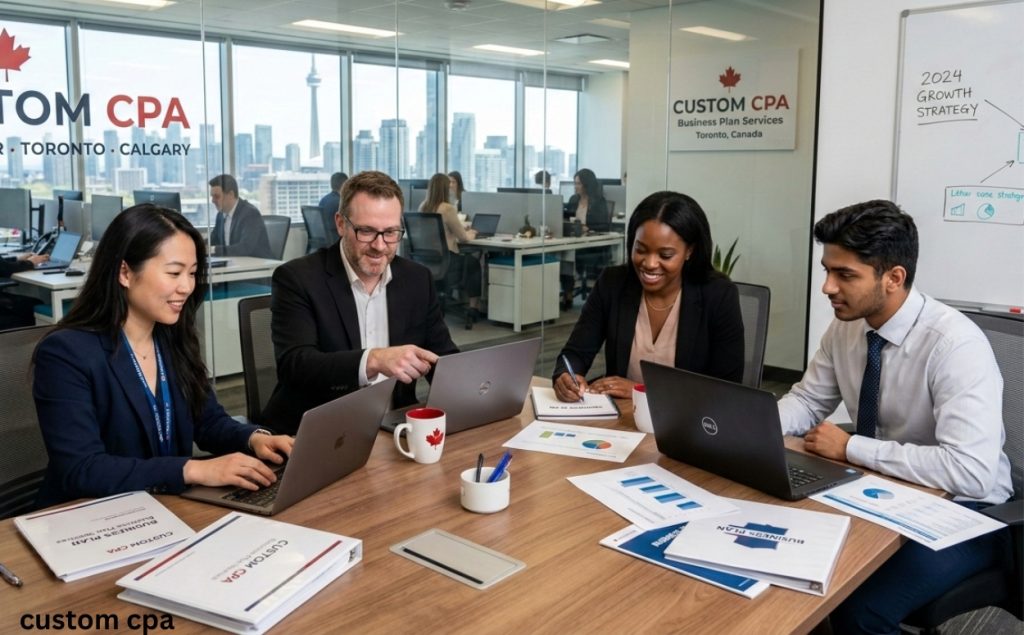
Business Plan Services for Fitness and Wellness Centers in Canada
CPA-prepared business plans with investor-ready financial models, market analysis, and growth strategies — built specifically for Canadian gyms, yoga studios, wellness clinics, and fitness businesses.
Why Fitness & Wellness Businesses Need a CPA-Prepared Business Plan
Opening or expanding a fitness center in Canada without a professionally prepared business plan is one of the most common reasons new businesses fail within their first two years. The fitness industry operates on thin margins — industry averages hover around 8–12% net profit — and lenders know this. A generic template downloaded from the internet will not convince a Canadian bank, credit union, or BDC officer to approve a six-figure equipment loan or commercial lease guarantee.
A CPA-prepared business plan goes beyond basic formatting. It includes financial projections grounded in Canadian accounting standards (ASPE), properly models GST/HST obligations, accounts for seasonal cash flow fluctuations that every fitness business experiences, and presents assumptions that a trained financial analyst will find credible. That credibility is the difference between a funded business and a rejected application.
The fitness and wellness industry also presents unique financial characteristics that general business plan writers frequently miss: recurring membership revenue with predictable churn rates, high upfront capital expenditure on equipment, significant lease obligations, seasonal enrollment patterns, and multiple revenue streams including personal training, group classes, retail, and digital memberships. A CPA who understands these dynamics builds a plan that reflects how your business actually operates.
Ready to Build Your Fitness Business Plan?
Speak with a CPA who understands the fitness and wellness industry in Canada.
Canadian Fitness & Wellness Market Overview (2026)
Understanding your market is the foundation of any credible business plan, and the Canadian fitness industry provides a compelling story for lenders and investors. The market has fully recovered from the pandemic and posted its strongest revenue figures on record. Before projecting your own revenue, your plan needs to demonstrate that you understand this landscape — both the opportunities and the risks.
| Market Metric | Figure | Source / Year |
|---|---|---|
| Total Industry Revenue (Canada) | $6.3 Billion | IBISWorld, 2026 |
| Year-Over-Year Growth | 5.3% | IBISWorld, 2026 |
| Number of Fitness Facilities | ~9,500+ | Statistics Canada |
| Canadians with Gym Memberships | ~15–21% | Industry Estimates, 2025 |
| Average Operating Profit Margin | 8.3–11.4% | Statistics Canada / IHRSA |
| Top Trends 2026 | Active Aging, Functional Training, Mental Health Integration | canfitpro Survey |
These numbers tell a clear story: the Canadian fitness market is healthy and growing, but competition is real and margins are tight. Your business plan must demonstrate a clear value proposition and realistic unit economics to stand out — both to your target market and to anyone reviewing your financials.
Key Components of a Fitness & Wellness Center Business Plan
A professional fitness business plan is not a single document — it is a structured argument that your business will succeed. Every section must build logically toward your financial projections. Here are the core components Custom CPA includes in every fitness and wellness center business plan we prepare for Canadian clients:
- Executive Summary — A concise overview of your business concept, target market, competitive advantage, funding request, and projected returns. Written last but placed first; this is often the only section a banker reads before deciding to continue.
- Company Description & Legal Structure — Business type (sole proprietorship, corporation, partnership), province of registration, and operating details. Includes Canadian-specific considerations such as incorporation benefits for tax planning.
- Market Analysis — Local demographic data, competition mapping (within a defined radius), target customer profiles, and market sizing. For fitness businesses, this includes population density, income levels, age demographics, and existing facility saturation.
- Services & Revenue Model — Detailed breakdown of every revenue stream: memberships (tiered), personal training, group classes, retail, supplements, digital programs, corporate wellness contracts, and facility rentals.
- Marketing & Sales Strategy — Customer acquisition plan with cost-per-acquisition estimates, retention strategies, referral programs, and pre-sale campaign timelines for new locations.
- Operations Plan — Facility layout, equipment list, staffing model, operating hours, software systems (booking, POS, CRM), and insurance requirements.
- Management Team — Bios, relevant certifications (canfitpro, CSEP, ACE), and industry experience. Lenders evaluate the people behind the plan as much as the numbers.
- Financial Projections (3–5 Years) — Income statements, balance sheets, cash flow forecasts, break-even analysis, and sensitivity analysis. Prepared according to Canadian accounting standards.
- Funding Request & Use of Funds — Clear articulation of how much capital is needed, what it will be used for, and the proposed repayment or return structure.
- Appendices — Lease terms, equipment quotes, contractor certifications, market research data, and supporting documents.
Each of these sections is tailored specifically to the Canadian fitness and wellness regulatory and tax environment. For example, your financial projections must account for GST/HST collection and remittance — an area where many generic business plans fall short. For help with GST/HST obligations, see our guide on GST/HST Rebate Applications.
Get a Business Plan That Lenders Trust
Custom CPA builds fitness business plans with the financial rigor Canadian banks and investors expect.
Revenue Streams & Financial Modeling for Fitness Businesses
The most critical section of your business plan — and the one lenders scrutinize most carefully — is the revenue model. Fitness and wellness centers generate revenue from multiple streams, and your business plan must project each one independently with defensible assumptions. A single "total revenue" line without granular breakdown is a red flag for any experienced lender.
| Revenue Stream | % of Typical Revenue | Key Assumptions to Model |
|---|---|---|
| Memberships (Monthly / Annual) | 50–65% | Member count, avg. monthly fee, churn rate, seasonal enrollment |
| Personal Training | 15–25% | Sessions/week, trainer utilization, pricing per session |
| Group Fitness Classes | 5–12% | Class capacity, attendance rate, drop-in vs. package pricing |
| Retail & Supplements | 3–8% | Avg. transaction size, margin %, purchase frequency |
| Digital / Virtual Programs | 2–6% | Subscriber count, monthly fee, content production cost |
| Corporate Wellness Contracts | 2–8% | Number of contracts, per-employee pricing, renewal rate |
| Facility Rental / Events | 1–4% | Hours available, hourly rate, utilization |
Custom CPA builds each revenue stream as a separate financial model with its own assumptions, growth trajectory, and sensitivity analysis. This level of detail is what distinguishes a CPA-prepared business plan from a template. For businesses that also need strategic financial guidance beyond the plan itself, our Strategic CFO Advisory Services provide ongoing fractional CFO support.
Your financial model should also include key performance indicators (KPIs) that fitness industry lenders understand: member churn rate (industry average: 30–50% annually), revenue per square foot, cost per member acquisition, average revenue per member (ARM), and trainer utilization rate. These metrics demonstrate to lenders that you understand the operational realities of your business.
Getting these models right from the start also supports your ongoing accounting and tax planning. See our guide on Capital Cost Allowance documentation requirements for equipment-heavy businesses like fitness centers.
Startup Costs & Capital Planning
Understanding startup costs is where many fitness entrepreneurs underestimate their capital needs — and where a CPA-prepared plan provides the most value. A well-documented capital plan prevents underfunding, which is one of the primary causes of fitness business failure in Canada.
| Fitness Business Type | Estimated Startup Cost (CAD) | Typical Square Footage |
|---|---|---|
| Boutique Studio (Yoga, Pilates, Cycling) | $75,000 – $200,000 | 1,500 – 3,000 sq ft |
| Personal Training Studio | $50,000 – $150,000 | 1,000 – 2,500 sq ft |
| Mid-Size Gym | $250,000 – $600,000 | 5,000 – 12,000 sq ft |
| Full-Service Health Club | $500,000 – $2,000,000+ | 15,000 – 40,000+ sq ft |
| Wellness Center (Multi-Discipline) | $150,000 – $500,000 | 2,500 – 8,000 sq ft |
Your business plan must present these costs line by line with supporting quotes and estimates. Lenders expect to see vendor quotes for major equipment, lease term sheets, and contractor estimates for leasehold improvements — not round numbers pulled from industry averages. Custom CPA helps you compile this documentation as part of the business plan engagement.
Need Help Estimating Your Startup Costs?
Our team builds detailed capital budgets and cash flow models for fitness businesses across Canada.
Funding Options for Canadian Fitness & Wellness Centers
A strong business plan opens doors to multiple financing channels. Canada offers several programs specifically relevant to fitness and wellness business owners. Your business plan should be tailored to the requirements of your targeted funding source — and Custom CPA ensures this alignment from the start.
| Funding Source | Typical Amount | Key Requirements |
|---|---|---|
| CSBFP (Canada Small Business Financing Program) | Up to $1,000,000 | Equipment & leasehold; requires approved business plan |
| BDC (Business Development Bank) | $50,000 – $5,000,000 | Detailed plan, financial projections, management experience |
| Commercial Bank Loan | Varies | CPA-prepared financials, personal guarantees, collateral |
| Provincial Grant Programs | $5,000 – $100,000 | Varies by province; business plan required |
| Angel Investors / Private Equity | $100,000 – $2,000,000+ | Compelling plan, scalable model, clear exit strategy |
For businesses with complex financial structures or multi-location expansion plans, our Business Planning & Financial Modeling service provides the deep financial architecture that sophisticated lenders and investors require. This goes beyond a standard business plan into full financial modeling with scenario analysis.
Business Plans by Fitness & Wellness Business Type
No two fitness businesses are alike, and your business plan should reflect the specific operational, financial, and regulatory realities of your particular model. Custom CPA has prepared business plans across the full spectrum of Canadian fitness and wellness businesses:
| Business Type | Plan Focus Areas | Common Funding Use |
|---|---|---|
| Commercial Gym / Health Club | Membership projections, equipment CCA, lease modeling | Equipment financing, leasehold improvements |
| Yoga / Pilates / Barre Studio | Class capacity utilization, instructor compensation model | Studio buildout, marketing launch |
| CrossFit / Functional Fitness | Affiliate fees, community model, specialty equipment | Equipment, facility adaptation |
| Wellness / Holistic Health Center | Multi-practitioner revenue share, diverse service mix | Facility, technology, initial staffing |
| Martial Arts / Boxing Gym | Belt progression retention, youth programming | Mat & equipment, branding |
| Physiotherapy + Fitness Hybrid | Regulated practitioner billing, insurance coordination | Clinical equipment, licensing, space |
| Online / Hybrid Fitness Platform | Subscriber economics, content production costs, tech stack | Technology development, marketing |
Each plan type requires different financial assumptions, industry benchmarks, and regulatory considerations. For example, a physiotherapy-fitness hybrid must address regulated health profession billing and potentially different GST/HST treatment for health services versus fitness memberships. A commercial gym business plan, by contrast, centers on membership churn modeling and equipment depreciation through Capital Cost Allowance (CCA).
Why Canadian Fitness Businesses Choose Custom CPA
Custom CPA is not a template-based business plan mill. We are Chartered Professional Accountants with deep experience in Canadian tax, accounting, and advisory services for small and medium businesses. When you work with Custom CPA for your fitness business plan, you get:
- CPA-Credentialed Financial Projections — Your financial models are built by qualified accountants, not writers or marketers. Banks and investors know the difference.
- Canadian Tax Expertise Built In — GST/HST, CCA for equipment, payroll tax, corporate structure optimization — your plan reflects the real Canadian tax environment from day one.
- Industry-Specific Benchmarking — We use actual fitness industry financial benchmarks, not generic small business averages, to validate your assumptions.
- Integrated Service Model — After your plan is complete, Custom CPA can continue as your accounting firm, tax advisor, and fractional CFO — seamless continuity from plan to execution.
- Lender-Ready Documentation — We know exactly what Canadian banks, BDC, and CSBFP reviewers want to see, and we structure your plan accordingly.
- Ongoing Support — Our Core Accounting & Tax Services and Specialized Services ensure your business stays on track long after the plan is delivered.
For a broader look at how our software recommendations support your day-to-day operations once you're open, see our reviews of the Top 10 Accounting Software for Canadian Businesses.
Our Business Plan Preparation Process
Custom CPA follows a structured, collaborative process to ensure your business plan accurately represents your vision while meeting the rigorous standards lenders and investors expect. Here is what you can expect when you engage us for a fitness or wellness center business plan:
- Discovery Call (Free) — We learn about your concept, goals, location, timeline, and funding needs. We assess the scope and provide a clear fee quote.
- Information Gathering — We collect market data, competitor information, equipment quotes, lease terms, and your operating assumptions. We guide you on what to provide.
- Financial Modeling — Our CPAs build your revenue model, expense forecasts, cash flow projections, and break-even analysis using fitness industry–specific assumptions and Canadian tax parameters.
- Narrative Development — We write the market analysis, operations plan, and strategic sections, incorporating your vision with data-driven insights.
- Review & Refinement — You review the complete draft. We refine projections, adjust assumptions, and polish every section until the plan meets your approval.
- Delivery & Lender Support — We deliver the final plan in presentation-ready format and can attend lender or investor meetings with you to answer financial questions directly.
Let's Build Your Fitness Business Plan Together
Schedule your free discovery call today. No obligation — just an honest conversation about your business.
Frequently Asked Questions
Start Your Fitness Business Journey with Custom CPA
From your first business plan to ongoing accounting, tax, and CFO advisory — we are your partner at every stage of growth.